
Where Should a Luxury Home Invest? Planning the Design Budget for a New Build
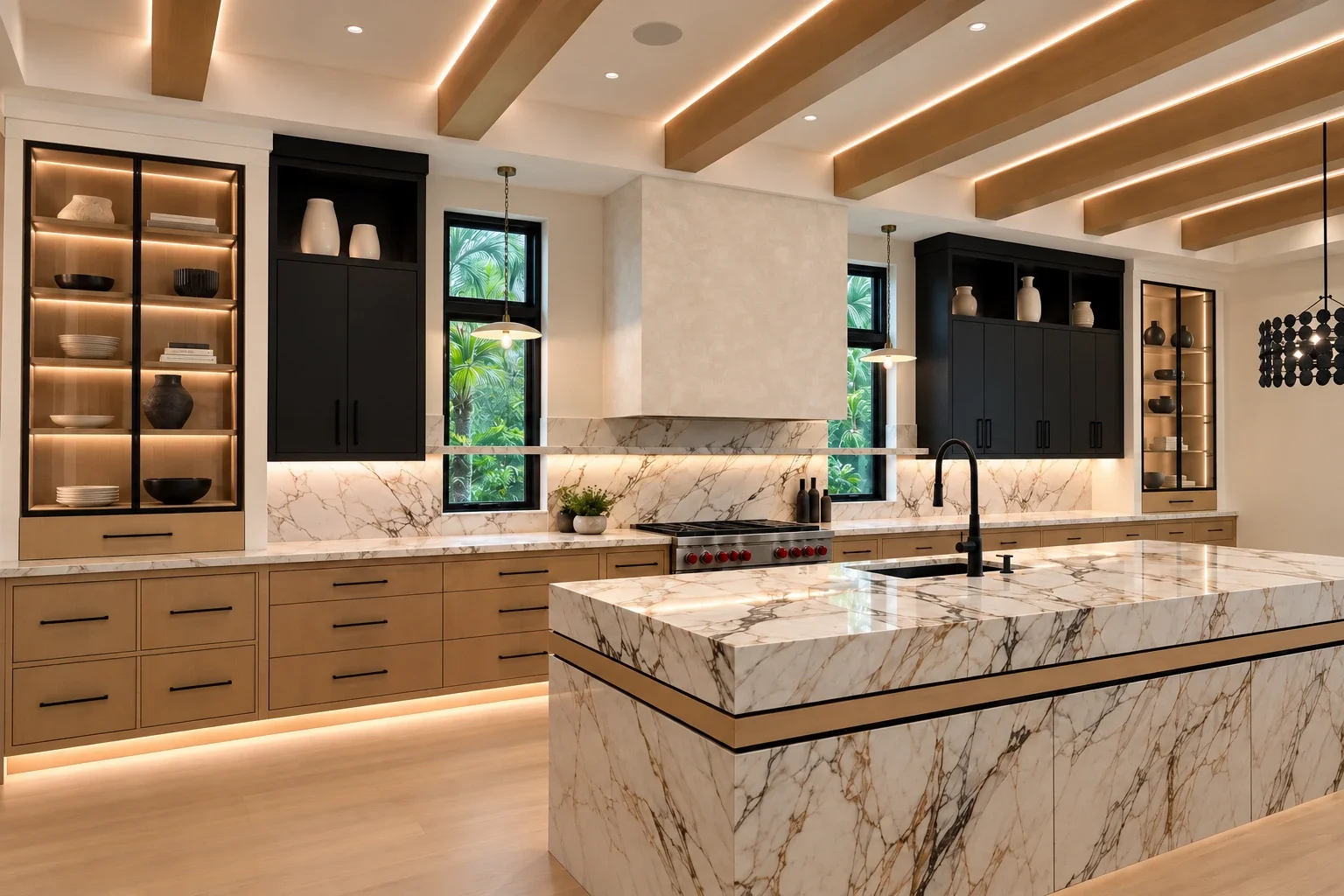
Builder allowances are placeholders, not a design budget. In a luxury new build, the important question is not whether every allowance is high or low. It is whether the plan directs investment toward the spaces, materials, craftsmanship, and custom details that will define the home. Test each allowance against real selections early, then decide where the home should make its strongest statement.
Four questions every design allowance should answer
1. What product, material, quantity, craftsmanship, and installation does the allowance actually include?
2. Do representative selections support the scale, performance, and design intent of the room?
3. Is this category part of a money center where the client wants the greatest daily or visual impact?
4. What investment belongs here once the placeholder is replaced with real design and pricing information?
A builder allowance should be tested against the design
Before major selections and commitments are made, I want to understand what each allowance covers and whether it supports the home being designed. The question is not simply, 'Can we find something at this number?' The better question is, 'Will this number support the material, craftsmanship, performance, and impact this part of the home requires?'
A builder allowance is only useful when the scope behind it is clear. Each number should be tested against the actual materials, quantities, craftsmanship, finishes, and installation the design requires. In a luxury home, that project-specific review matters far more than comparing an allowance to a generalized benchmark.
A product can meet a basic specification and still miss the scale, finish, performance, customization, or depth the room requires. Reviewing allowances early allows the team to compare placeholder numbers with the actual design before the client is choosing between a diluted idea and an unplanned increase.
Start by identifying the money centers
I think of the 'money centers' as the places where a client wants the strongest daily experience or the greatest architectural impact. They are personal. For one family, it may be the kitchen. Another client may care most about the primary suite, an outdoor entertaining area, a library, or the rooms where extended family gathers.
A money center should carry a clear point of view. I would rather put the investment into one extraordinary feature wall than spread it thinly across five rooms. Stone, statement lighting, custom millwork, and art can give the home a defining moment when they are treated as part of the architecture rather than isolated upgrades.
The point is not that one room is universally more important than another. It is that every room does not need to carry the same level of investment. Naming the priorities early allows the design budget to reflect how the client wants to live and where the home should be unforgettable.
A substantial design budget still needs priorities
A substantial budget creates more possibilities, but it does not remove the need to choose. Custom work, specialty stone, complex lighting, furnishings, art, and technology can expand quickly when every idea is treated as equally essential.
Priorities give the design a point of view. They allow the team to concentrate craftsmanship and visual impact where they will matter most instead of spreading attention so evenly that nothing feels decisive.
Every investment should earn its place
Comparing options should clarify what each one delivers: the character of the material, the level of craftsmanship, its longevity, the complexity of installation, and the experience it creates in the room. Those differences matter more than a generic good, better, or best label.
This turns a vague question about cost into an informed decision about value. A hand-finished material may deserve the investment where it will be seen and touched every day. In another location, a restrained supporting choice may allow the room's strongest element to command the attention it deserves.
Clear comparisons keep every adjustment connected to the design as a whole. The goal is not to reduce every category. It is to make sure each decision strengthens the priorities, proportion, material story, and daily experience of the home.
Clear priorities create confidence during selections
Even a carefully developed design budget will evolve as the work becomes more detailed. A client may decide that a particular slab, lighting piece, millwork detail, or work of art deserves additional investment. The difference is that the choice is deliberate and tied to the design.
When the budget, priorities, and design direction are discussed together, the team knows what each number is meant to accomplish. Coordinating those decisions early keeps alternatives available and allows the strongest ideas to remain intact as selections and construction move forward.
Make the design budget reflect the home you value
The right question is not whether every allowance is high or low. It is whether the total plan supports the spaces, materials, functions, and experiences that matter most. Before major selections begin, identify what is non-negotiable, where flexibility exists, and which parts of the home deserve the greatest investment.
Domina Design helps clients connect allowances to real selections, identify the home's money centers, and decide where investment will be felt every day. These decisions are strongest when they are coordinated before the plans are finalized. Explore the luxury residential design process to see how design priorities move from concept into construction and installation.
Frequently asked questions
What is a construction allowance in a new-build budget?
A construction allowance is a placeholder amount for a product, finish, fixture, or category that has not been fully selected when the budget is prepared. It keeps construction pricing moving, but it is not a complete design budget and does not confirm that the amount matches the client's preferred material, craftsmanship, or scope.
Which selections commonly have allowances?
Allowances may be used for cabinetry, countertops, flooring, tile, plumbing fixtures, lighting, appliances, hardware, and custom work. The exact categories depend on the project documents and builder, so each allowance should be reviewed against the written scope.
How can I tell whether an allowance is realistic?
Clarify exactly what the allowance includes, then compare it with representative selections that fit the design direction, quantity, performance, installation, and level of customization. If those selections consistently sit outside the allowance, replace the placeholder with a more accurate design investment before commitments are made.
What happens when a selection exceeds its allowance?
The difference may increase the project investment or prompt a review of priorities elsewhere. The exact handling depends on the construction agreement. Reviewing the decision early allows the client and project team to keep the most important architectural and material moments intact.