
I Don't Know My Style. How Does a Designer Figure Out What I Like?
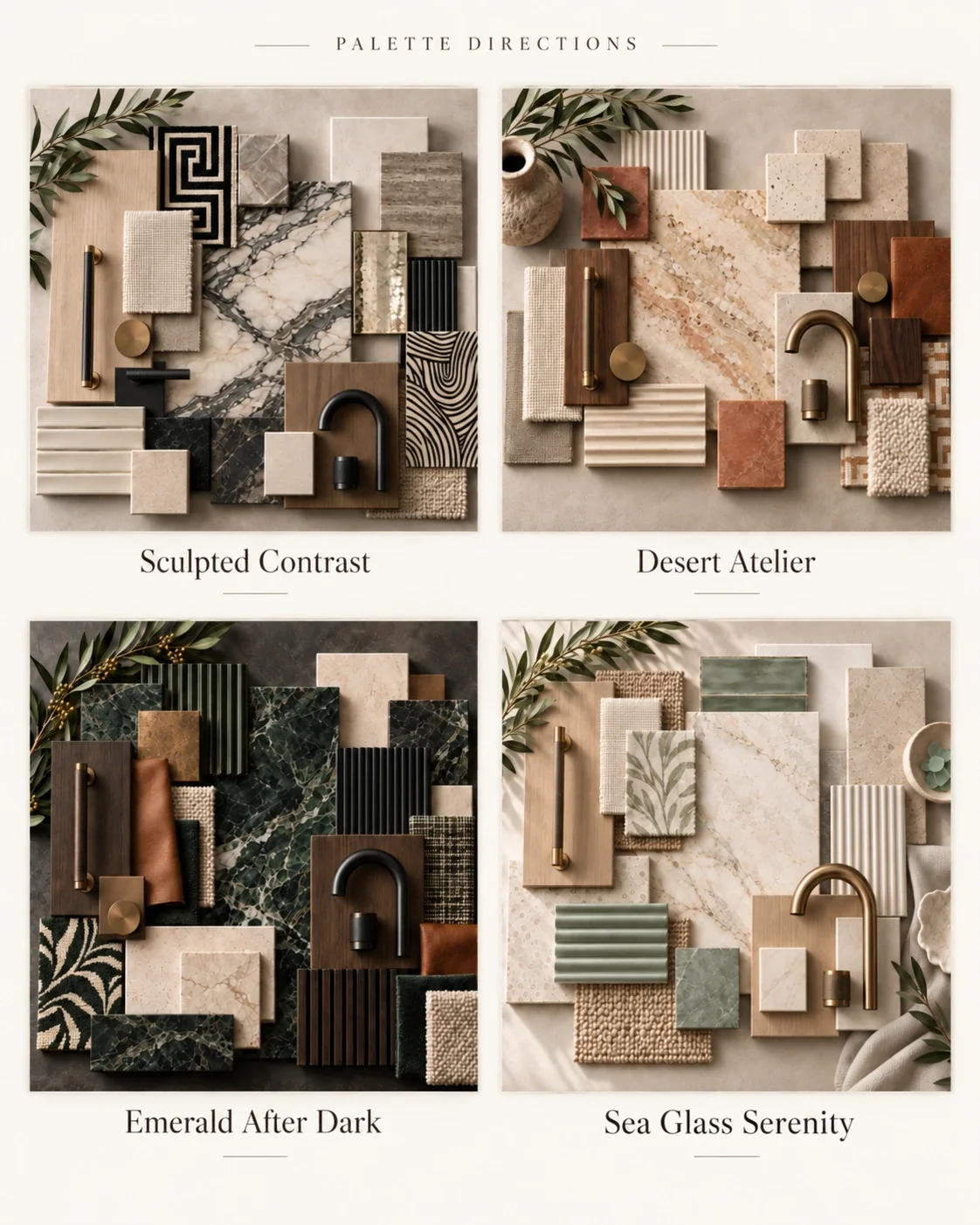
You do not need to know your interior design style before hiring a designer. I study your reactions to rooms, materials, lighting, architecture, art, and everyday routines, then look for patterns. Mood boards and honest feedback turn those patterns into a direction that is personal, intentional, and original.
How a designer discovers your direction
1. Ask how the home should function and what experience the client wants in daily life.
2. Review images, objects, materials, and experiences that create a strong reaction.
3. Identify recurring qualities such as warmth, restraint, contrast, material depth, formality, or ease.
4. Test those qualities through mood boards, palettes, layouts, and material relationships.
5. Refine the direction through specific feedback before permanent decisions are made.
Style is often easier to recognize than describe
Words such as modern, traditional, warm, minimal, or luxurious can mean something different to every person. Two clients may use the same word while imagining completely different rooms. That is why I do not rely on labels alone.
Visual references give us something specific to discuss. I may show finishes, complete rooms, architectural details, ceilings, lighting, levels of contrast, or interesting installation ideas. The goal is not to ask the client to select a prepackaged look. It is to notice what creates a response.
A quick 'I love that' matters. So does an immediate 'That does not feel like me.' Patterns begin to appear in the reasons behind each response. A client may be drawn to strong contrast but not sharp geometry, to natural materials that feel tailored rather than rustic, or to a disciplined background anchored by one sculptural element.
A mood board is a communication tool
A mood board is most useful when it creates conversation. It allows the client to react to several kinds of information at once without making a final selection. I am looking at what they notice first, what they return to, what feels too expected, and what makes them uncomfortable for the right or wrong reasons.
This is a client-centered process. The American Society of Interior Designers describes interior design as developing solutions that reflect a client's needs and values. The designer's role is to explain the process clearly and guide clients through decisions without overwhelming them with options.
Sometimes the most valuable image is not one the client wants copied. It may contain a ceiling idea, a lighting relationship, a sense of openness, or a material combination that reveals something important. We can separate that useful quality from the rest of the room and allow it to inform an original solution.
This takes pressure off the client. You are not being asked to design the home yourself. You are being invited to respond honestly so the design can become more specific to you.
Your reactions begin shaping more than finishes
Discovery is not limited to color and material. What a client responds to can influence the floor plan, ceiling concepts, lighting, focal points, built-in elements, and the relationship between rooms. A preference for intimate spaces may suggest a different approach than a desire for long views and open entertaining. A love of art may affect walls, lighting, and circulation before furniture is selected.
That is why these conversations belong early in the process. The more I understand about the client's habits, experiences, preferences, and way of seeing the world, the more naturally those insights can move into schematic design. The result is not a theme applied to the home. It is a direction developed from the person who will live there.
A personal home should not look like every other project
I do not want every client's house to look the same. A consistent design process should not produce a formula. It should create the clarity needed to make different decisions for different people.
One client wants a disciplined palette anchored by a single monumental moment. Another is energized by contrast, movement, and unexpected material combinations. Some families live casually but entertain formally. Others want every space to carry the same level of intention from ordinary mornings through large gatherings.
The strongest interiors feel connected to the people who live in them. They reflect not only what the client finds beautiful, but how they move, gather, rest, work, host, and remember. That level of specificity cannot come from choosing a style name and repeating its familiar features.
Honest feedback is more valuable than design vocabulary
Clients sometimes hesitate to disagree because they assume the designer must know the 'right' answer. Good discovery depends on honest reactions. If something feels too formal, too plain, too busy, too cool, or simply unlike you, say so. We can explore why and use that information.
You are also allowed to change your mind as the direction becomes clearer. Early visual exploration is the right place to test ideas. The purpose is to narrow the field deliberately before the project reaches more permanent decisions.
You do not have to name your style to create a home that feels like yours
A successful design process gives clients a way to participate without asking them to become designers. You bring your reactions, priorities, memories, and daily life. I bring the questions, visual tools, technical understanding, and ability to translate those responses into a cohesive environment.
If you cannot name your style, that is a useful place to begin. Learn more about Andrea and the Domina Design approach, including an architecture-first point of view, material depth, and a willingness to create something bold and original for each client.
Frequently asked questions
Do I need to know my design style before hiring an interior designer?
No. A clear style label is not a prerequisite. Your designer can learn from the rooms, materials, objects, routines, and experiences you respond to, including what you dislike. Those reactions provide more useful direction than forcing every preference into one category.
What should I bring to the first design conversation?
Bring any images, objects, memories, practical needs, or strong reactions that help explain how you want the home to feel and function. The references do not need to match. Contradictions can reveal which qualities matter most and where the design needs balance.
What if two people in the household have different styles?
Different preferences are useful information. The designer can identify the priorities beneath each reaction, look for compatible materials or moods, and build a shared direction without asking either person to accept a generic compromise.
Will an interior designer impose a signature look on my home?
No two Domina Design homes look alike, but every one carries a point of view: architecture first, material depth, and a willingness to be bold and original. The client's habits, preferences, memories, architecture, and goals make that point of view specific to the home.